Tone sandhi in Changsha Xiang: A possible tone-stress interaction?
Shuxiao Gong (Beijing Language and Culture University)
Chengyu Guo (Beijing Normal University (Zhuhai))
Goal
- To investigate the phonetic properties of tone sandhi in Changsha Xiang, a Sinitic language with both left- and right-dominant tone sandhi.
- To explore the possibility that the tone sandhi in Changsha Xiang reflects metrical prominence (stress) at the word level.
Background
Changsha Xiang
- A Sinitic language of the Xiang group.
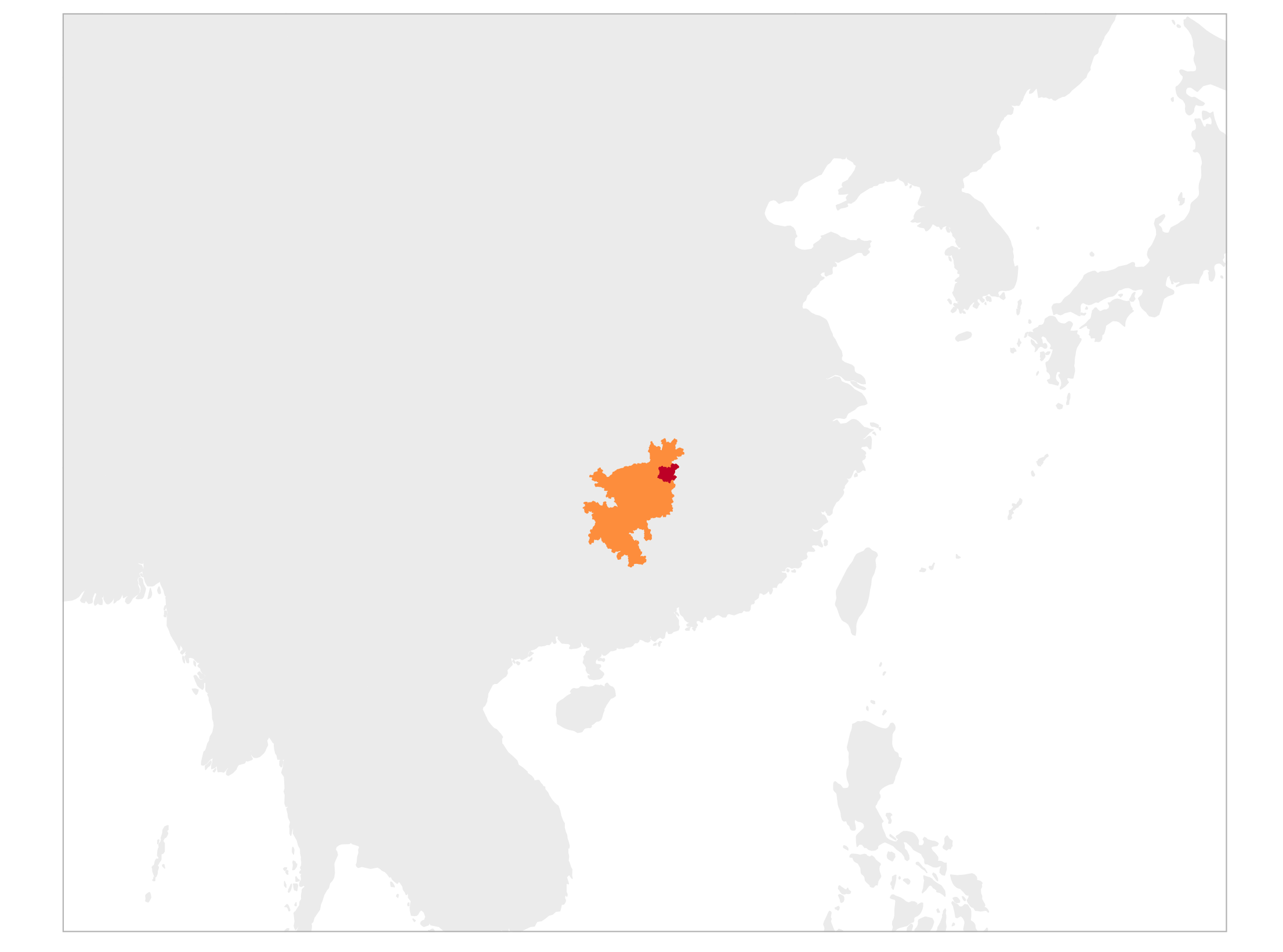
- Spoken in Changsha, the capital city of Hunan Province, China.
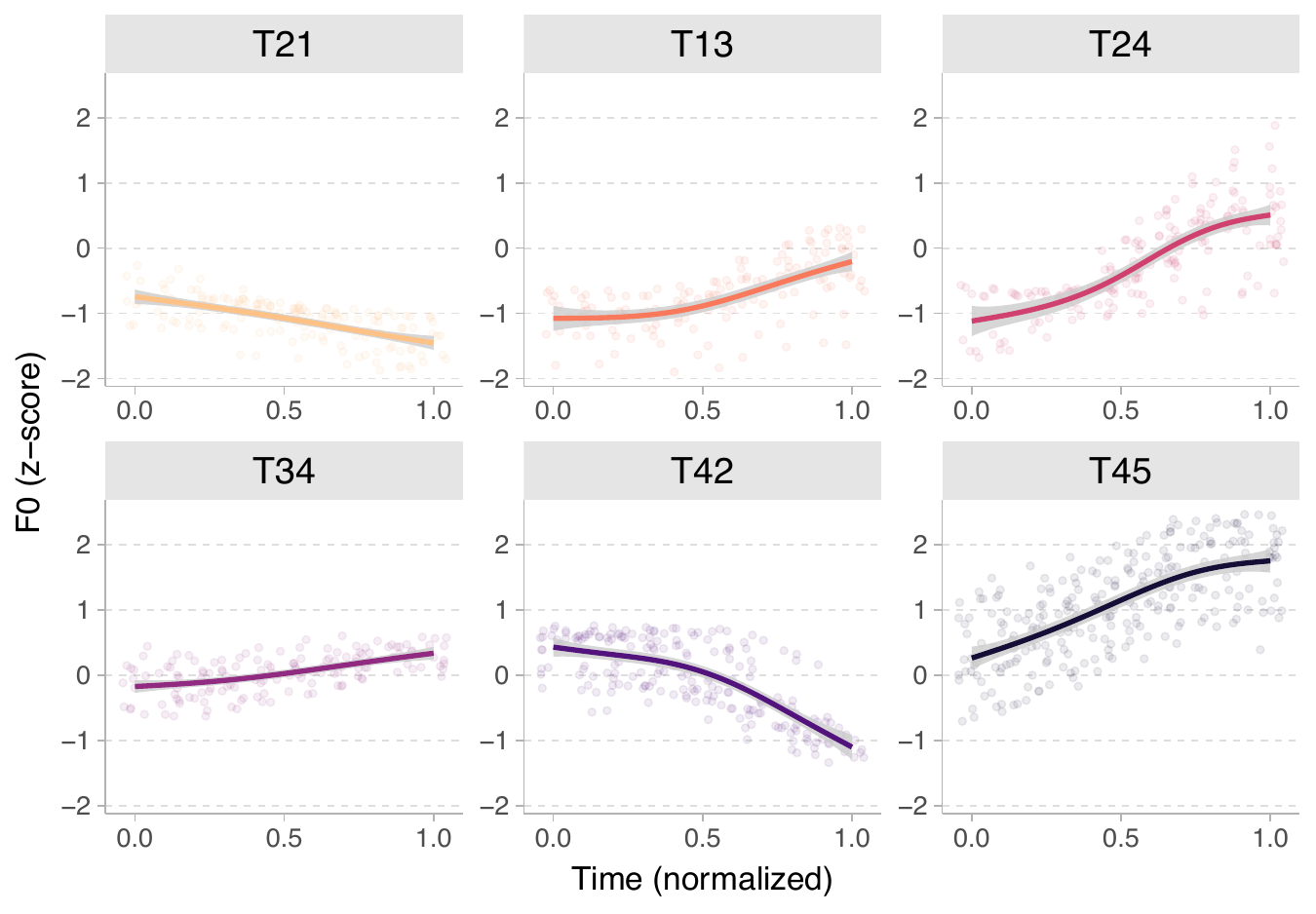
- Has a 6-tone system.
The location
Changsha Xiang tones
| Tone | Tone category | Example | Meaning |
|---|---|---|---|
| T13 | 阳平 Yangping | 头 /təʊ˩˧/ | ‘head’ |
| T21 | 阳去 Yangqu | 豆 /təʊ˨˩/ | ‘bean’ |
| T24 | 入声 Rusheng | 毒 /təʊ˨˦/ | ‘poison’ |
| T34 | 阴平 Qusheng | 都 /təʊ˧˦/ | ‘capital’ |
| T42 | 上声 Shangsheng | 陡 /təʊ˦˨/ | ‘steep’ |
| T45 | 阴去 Yingqu | 斗 /təʊ˦˥/ | ‘fight’ |
The tones in isolation
Sociolinguistic notes on the tones
- T13 (Yangping) and T24 (Rusheng) are merging in young speakers raised in the city, either due to similar tonal contours or due to the influence of Mandarin.
- Some T21 syllalbes are merging with T45 due to the influence of Standard Mandarin.
- The falling of T42 (T42 -> T44) is disappearing in young speakers.
Tone sandhi in Changsha Xiang
- Tone sandhi: a phonological process where the tone of a syllable changes based on the context in which the tones occur.
- Changsha Xiang has a position-sensitive tone sandhi system, exhibiting both left- and right-dominant patterns.
Tone sandhi in Changsha Xiang
- Bao et al. (1998), Zhong (2003), Zhong (2007):
- Tones are partially neutralized and leveled in the non-dominant syllables in disyllables.
- T45 -> T5
- {T42, T24} -> T4
- {T13, T34} -> T3
- T21 -> T2
- Paradigmatic neutralization (or “default insertion”, see J. Zhang (2007)), a type of tone sandhi usually found in right-dominant tone sandhis across Sinitic languages.
- Tones are partially neutralized and leveled in the non-dominant syllables in disyllables.
Structure-dependent tone sandhi
| Structure | Word | Meaning | Tone sandhi |
|---|---|---|---|
| Subj-pred | 牛贵 [lʲəu13−3.kʷeɪ45] | ‘cows are expensive’ | Right |
| Verb-result | 磨破 [mo13−3.pʰo45] | ‘to wear out’ | Right |
| Verb-obj | 停电 [tin13−3.tʲẽ45] | ‘to cut off electricity’ | Right |
Structure-dependent tone sandhi
| Structure | Word | Meaning | Tone sandhi |
|---|---|---|---|
| Coordinative | 呈现 [t͡sən13.ɕẽ45−5] | ‘to demonstrate’ | Left |
| Modifier-head | 咸菜 [xã13.t͡sʰaɪ45−5] | ‘salted vegetables’ | Left |
- Structure-dependent tone sandhi is also found in other Sinitic languages.
- E.g., Shanghai Wu (J. Zhang & Meng, 2016).
Structure-dependent tone sandhi
A famous minimal pair:
- 炒饭 /t͡sʰaʊ42-4.fã21/ ‘to stir-fry rice’ (V-Obj)
- 炒饭 /t͡sʰaʊ42.fã21-1/ ‘fried rice’ (Noun)
However,
Things are more complicated beyond disyllables.
- 干燥 /kã34.tsʰaʊ45-4/ ‘dry’ (Coordinative)
- 烘干 /xən34-3.kã34/ ‘to dry’ (V-Result)
- 风干 /xən34.kã34-3/ ‘to air dry’ (Manner-V)
- 烘干机 /xən34.kã34-3.t͡ɕiz34-3/ ‘drying machine’ (Noun)
- 风干鸡 /xən34.kã34-3.t͡ɕiz34-3/ ‘dry-cured chicken’ (Noun)
Tone sandhi at what prosodic level?
- Previous documentation may have conflated word- and phrase-level tonology in Changsha Xiang.
- There are words in Changsha Xiang in which the final syllable is always dominant, regardless of the syllable count.
- E.g., proper nouns.
- 文明 /wən13.min13-3/ ‘civilization/civilized’.
- 文明 /wən13-3.min13/ ‘Civilization (A video game series)’.
Common noun vs. person names
This applies to person names as well.
- 红旗 /xɤn13.t͡ɕiz13-3/ ‘red flag’ (Common noun)
- 洪齐 /xɤn13-3.t͡ɕiz13/ ‘Hong Qi’ (Person name)
- 洪明齐 /xɤn13-3.min13-3.t͡ɕiz13/ ‘Hong Mingqi’ (Person name)
- 乌鲁木齐 /uᵝ34-3.ləʊ42-4.mo24-4.t͡ɕiz13/ ‘Urumqi’ (Place name)
I’ll focus on the tone sandhi patterns in disyllabic common nouns and person names to avoid the confound of phrase-level prominence.
Languages with both tone and stress
- Stress and tone can co-occur in the same language (Hyman, 2006).
- Changsha Xiang tone sandhi resembles tone-stress interactions in languages such as Swedish (Riad, 2012), Goizueta Basque (Hualde et al., 2008), Lamba (Bickmore, 1995), Curaçao Papiamentu (Remijsen & Heuven, 2005), Itsunyoso Triqui (DiCanio, 2008), Quiaviní Zapotec (Peón, 2010) and Serbian (Zec & Zsiga, 2010).
Languages with both tone and stress
- In these languages, full tonal contrast is only found in the stressed syllables.
- The unstressed syllables are either toneless (Swedish, Serbian, Lamba, and Goizueta Basque) or have a reduced tonal inventory (Itsunyoso Triqui and Curaçao Papiamentu).
Languages with both tone and stress
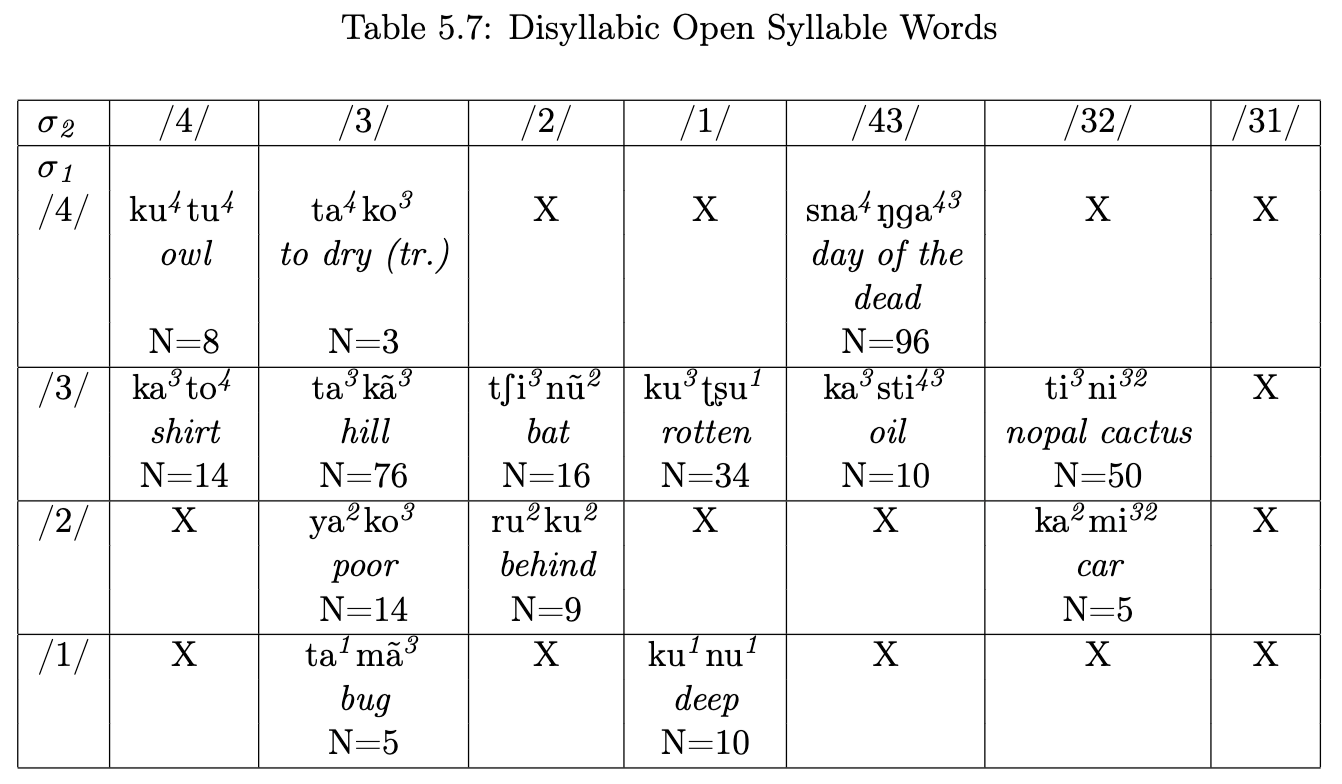
E.g., Itsunyoso Triqui (DiCanio, 2008)
- 9 lexical tones.
- Most words are disyllabic, and final syllables are obligatorily stressed.
- 6 tones (both level and contour tones) can occur in the final stressed syllable,
- But only 4 level tones can occur in the initial unstressed syllables.
Itsunoyo Triqui tones (DiCanio, 2008)
Phonetics of tone-stress interaction
- Duration was found to be the most reliable acoustic correlate of stress, probably because F0 has been utilized in the language’s tonal phonology.
- Curaçao Papiamentu (Remijsen & Heuven, 2005; Rivera-Castillo & Pickering, 2004), Pirahã (Everett, 1998), Thai (Potisuk et al., 1996), Itunyoso Trique (DiCanio, 2010), Ixcatec (DiCanio, submitted), Kurtöp (Hyslop, 2021), Central Pame (Torres & Herce, 2025), Tetsǫ́t’iné (Jaker & Howson, 2022), Chácobo (Tallman & Elías-Ulloa, 2020), Ei (Wang & Lin, 2016) and Fuzhou (Chan, 1985).
Phonetics of tone-stress interaction
- In contrast, in non-tonal languages, F0 has been reported to be the most reliable acoustic correlate of stress (Gordon & Roettger, 2017).
- Changsha Xiang has already shown tonal alternation, but does it also affect duration?
- Very few studies investigated tone-stress interaction in Sinitic languages (Duanmu, 1995; Duanmu, 1999; Wright, 1983; Zhong, 2007).
- Even fewer studies have explored its phonetic properties (Guo & Chen, 2022; Hu & Feng, 2024; Qing, 2014; Sui, 2016; Wang & Lin, 2016; Wen et al., 2023).
Phonetics of tone-stress interaction in Sinitic languages
Positive evidence:
- Standard (Sui, 2016) and Chengdu Mandarin (Liu et al., 2022): Initial dominant syllables are longer.
- Guo & Chen (2022): Dominant syllalbes are longer in Changsha Xiang (initial), Xiamen min (final), and Fuzhou min (final) but not in Chengdu Mandarin (initial).
- Hu & Feng (2024): Dominant syllables are longer in Chongqing Mandarin (initial), Kunming Mandarin (final), and Xiamen Min (final).
Phonetics of tone-stress interaction in Sinitic languages
Negative evidence:
Research questions
- Stressed syllables should show:
- longer duration,
- more distinct tonal contrast,
- less tonal coarticulation.
Research questions
Specifically, we ask the following questions:
- How does tone sandhi affect duration?
- How does tone sandhi affect tonal production and coarticulation in terms of F0 contour?
- Can we observe tonal simplification (neutralization and leveling) in non-dominant syllables in phonetics?
Methods
Speech materials
- For common noun trials, 4 sets of disyllabic words were created as the target words, with each set containing 36 words for each of the tonal combinations (144 in total).
- For person-name trials, 2 distinct sets of disyllabic person names were used (72 in total).
- Exp 1 tested only the person names, while Exp 2 tested only the common nouns.
- Each trial is repeated twice in Exp 1, while four times in Exp 2.
Participants
- 16 native speakers of Changsha Xiang.
- Participants have to have grown up and currently live in Changsha, and have to be able to distinguish T13 and T24 in order to be included in the study.
- 7 of the 16 participants completed both experiments, with 12 participants in each Exp.
Recording procedure
- Recording took place in participants’ homes using a Zoom H4n recorder and a Shure SM35 headset condenser microphone.
- They are instructed to read the trial sentences shown on a computer screen at a normal pace, and to repeat the sentences if they make any mistakes.
Data extraction
- Syllable and rhyme boundaries were manually annotated in Praat.
- Syllable duration was measured from the annotated boundaries.
- F0 was extracted from 10 equidistant points in the rhyme of each syllable, and normalized into z-scores for each speaker.
- F0 values that are more than 2sd away from the speaker’s mean were excluded as outliers.
Data analysis
- Linear mixed-effects models (LMM) were used to analyze the effects of tone sandhi on syllable duration.
- Generalized additive mixed-effects models (GAMM) were used to analyze the effects of tone sandhi on 1) tonal production and 2) coarticulation.
- GAMMs were fit separately for each tone in both analyses.
See details of the models in my paper: M. Zhang et al. (2026).
Data analysis
To investigate tonal coarticulation, I encoded T45 and T21 as H and L tones in the initial and final syllables.
Data analysis
- Linear Discriminant Analysis (LDA) was used to analyze the tonal merging and leveling patterns.
- To perform LDA, each f0 contour is fit with a cubic polynomial regression, and the coefficients of the fitted polynomial are used as features for LDA.
- The mean intensity of each syllable and the syllable duration were also included.
See details of the models in my paper: M. Zhang et al. (2026).
Results
Syllable duration
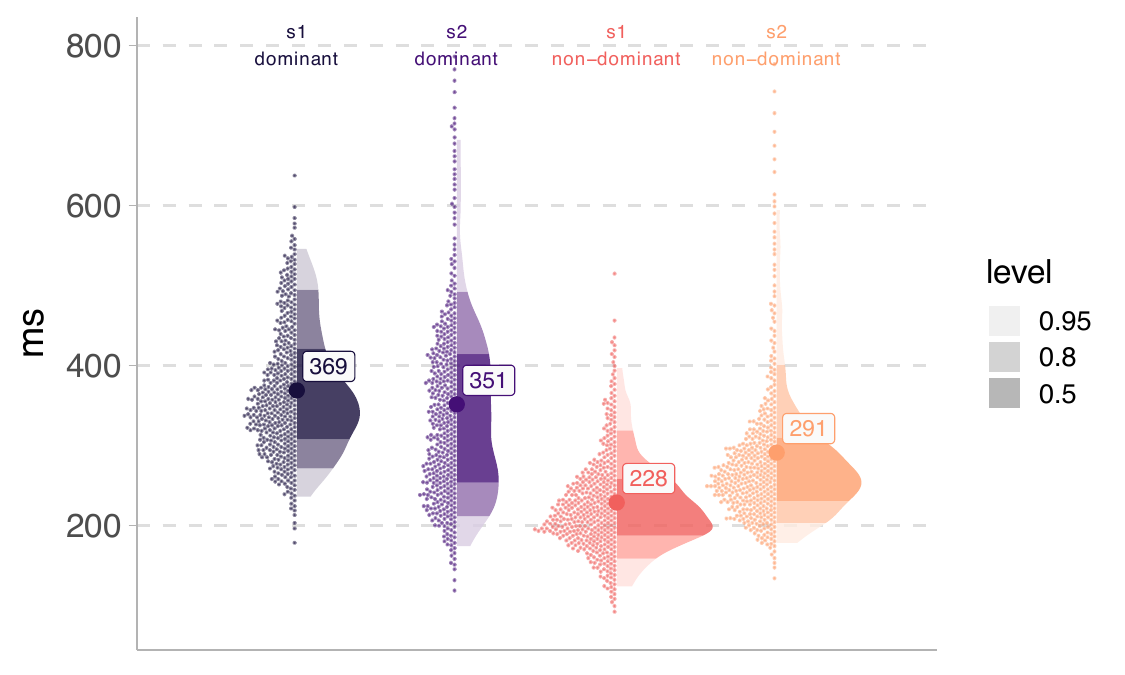
Syllable duration
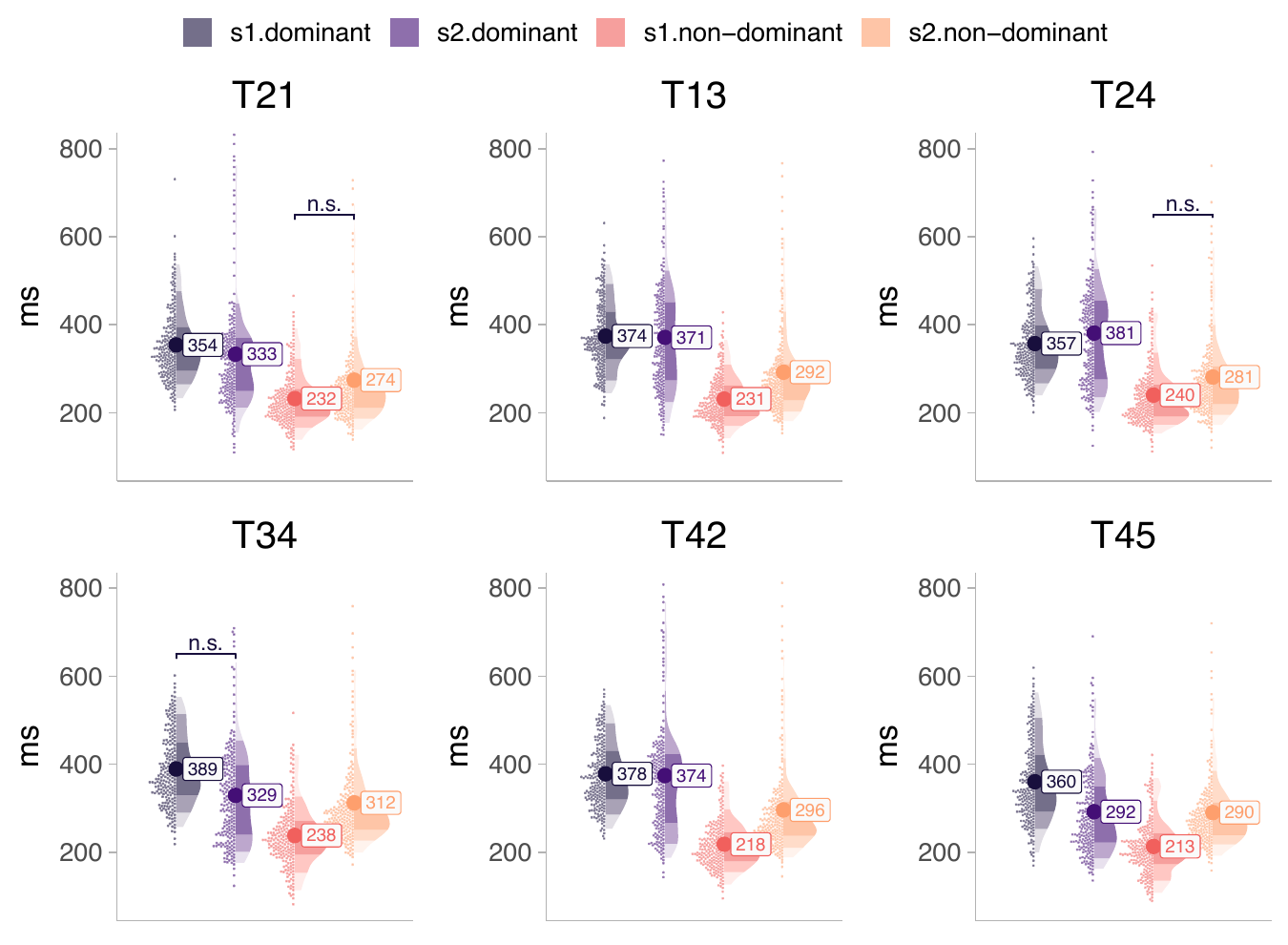
Findings on syllable duration
- There is always a difference between dominant syllables and non-dominant syllables across all tones.
- The only insignificant difference is dominant or non-dominant syllable-internal comparisons.
GAMM results on tonal production
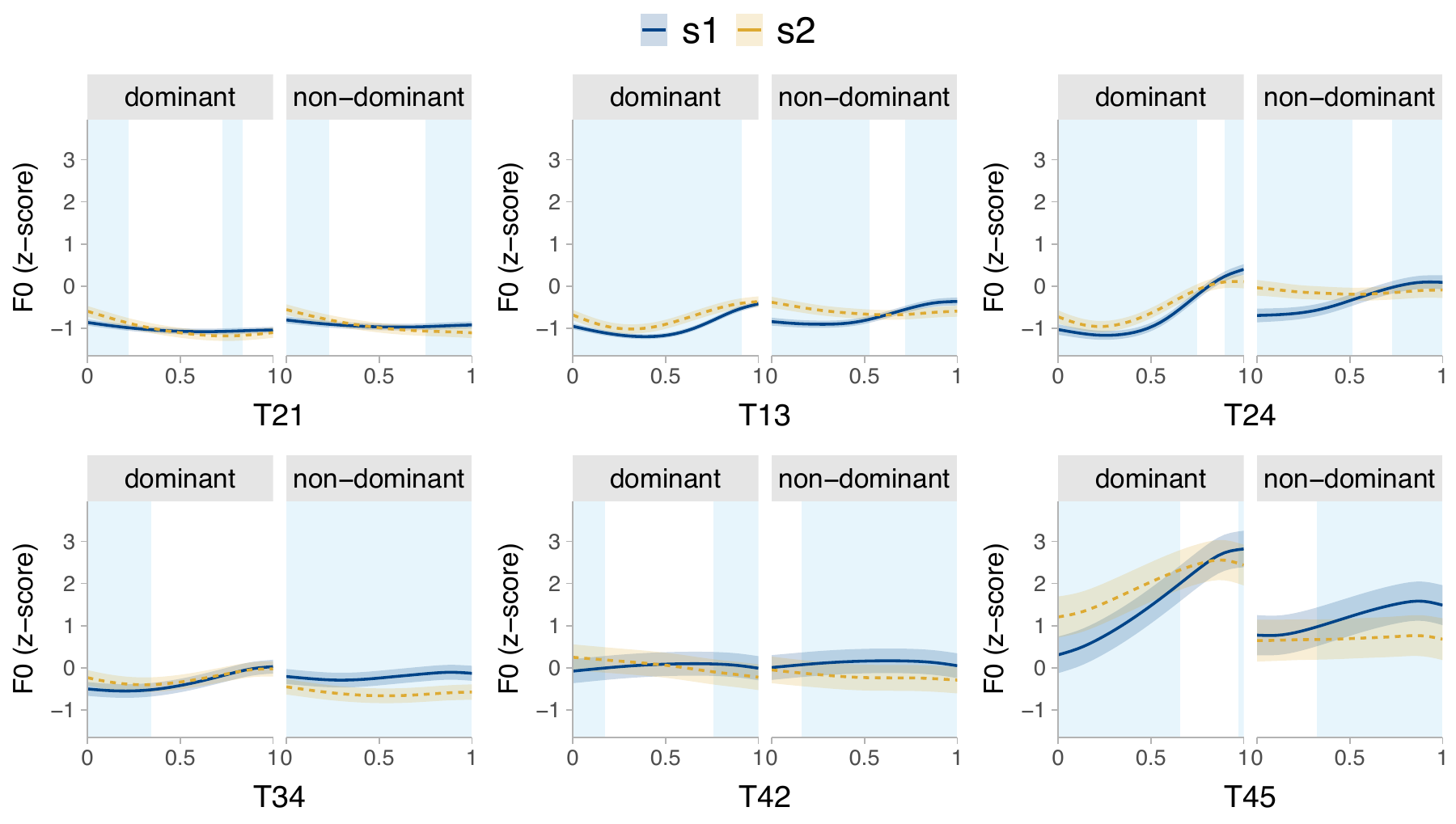
Findings on tonal production I
- In dominant syllables,
- T21 and T42 exhibit a slightly smaller falling in s1.
- The rising tones (T13, T24, T34, and T45) show a rising contour only in s1.
- In non-dominant syllables,
- T21 and T42 show a slightly smaller falling in s1.
- The rising tones (T13, T24, T34, and T45) are more or less leveled in s2.
GAMM results on tonal production
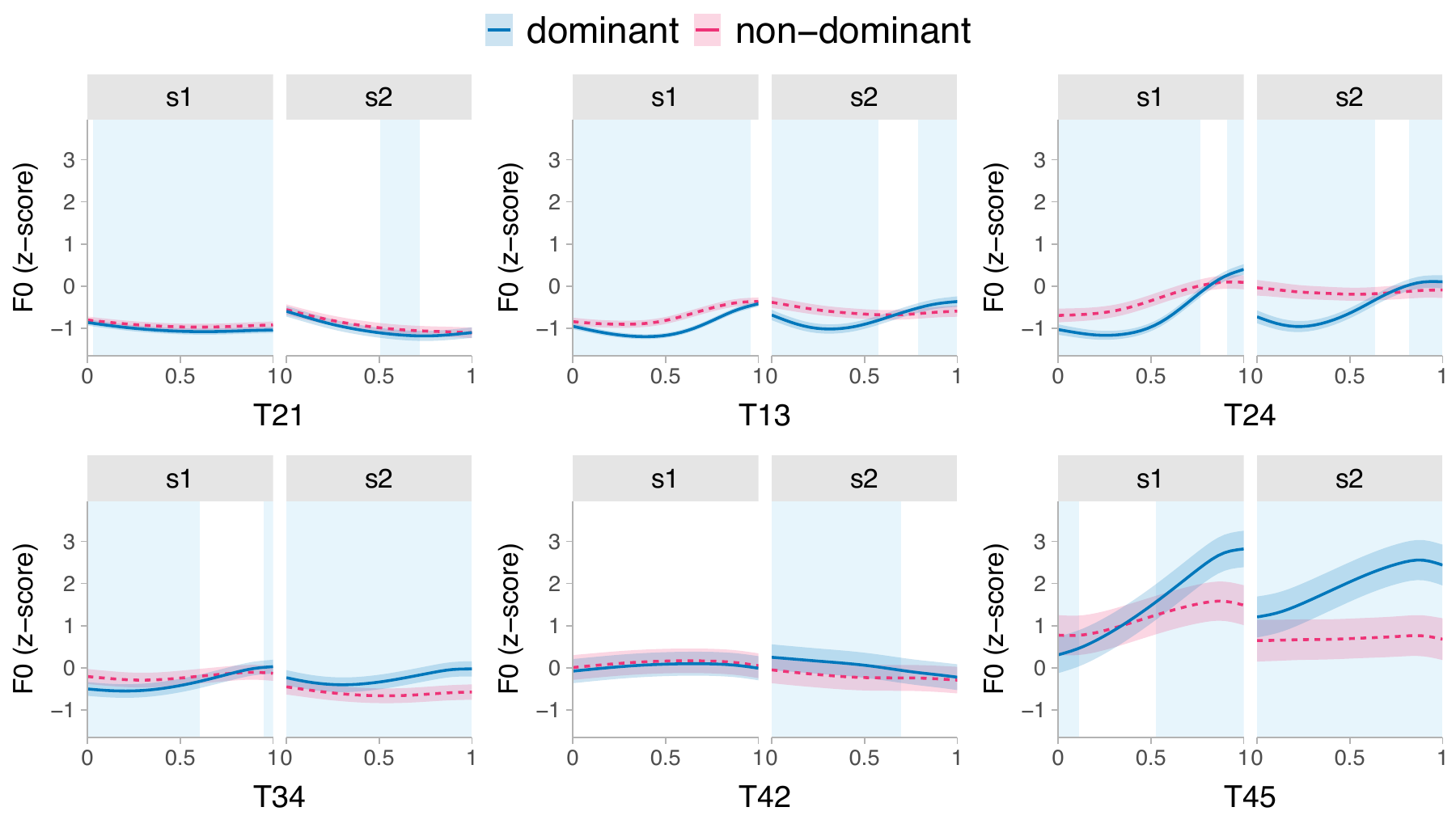
Findings on tonal production II
- In s1,
- In dominant syllables, T21 and T13 are entirely lower.
- The other rising tones (T24, T34, and T45) show a steeper rising contour in dominant syllables.
- T42 is unaffected.
- In s2,
- T21 reaches a lower F0 minumum in dominant syllables.
- T13, T24, T34 and T45 show rising contour only in dominant syllables.
Overall tone contours
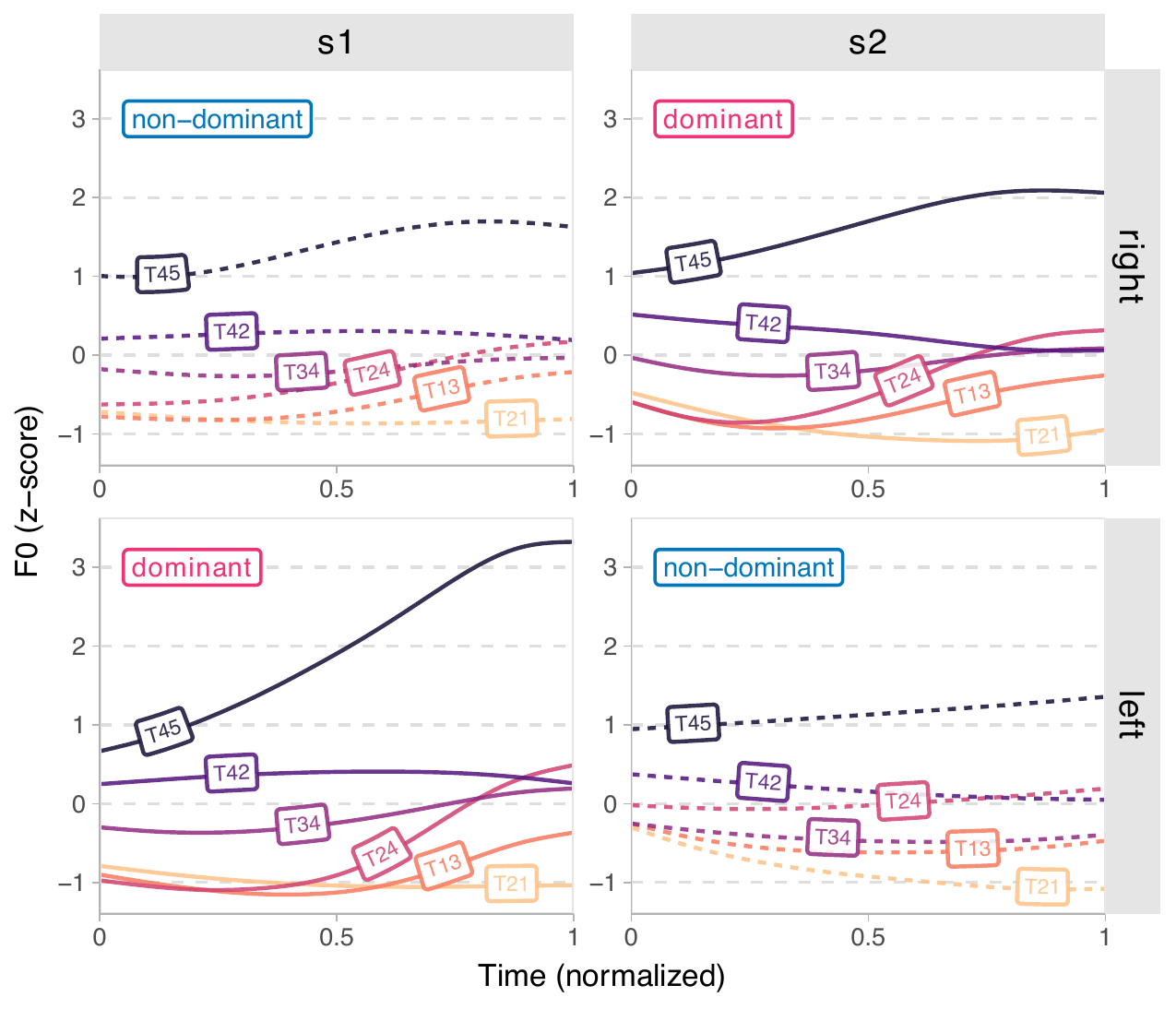
GAMM results on anticipatory coarticulation
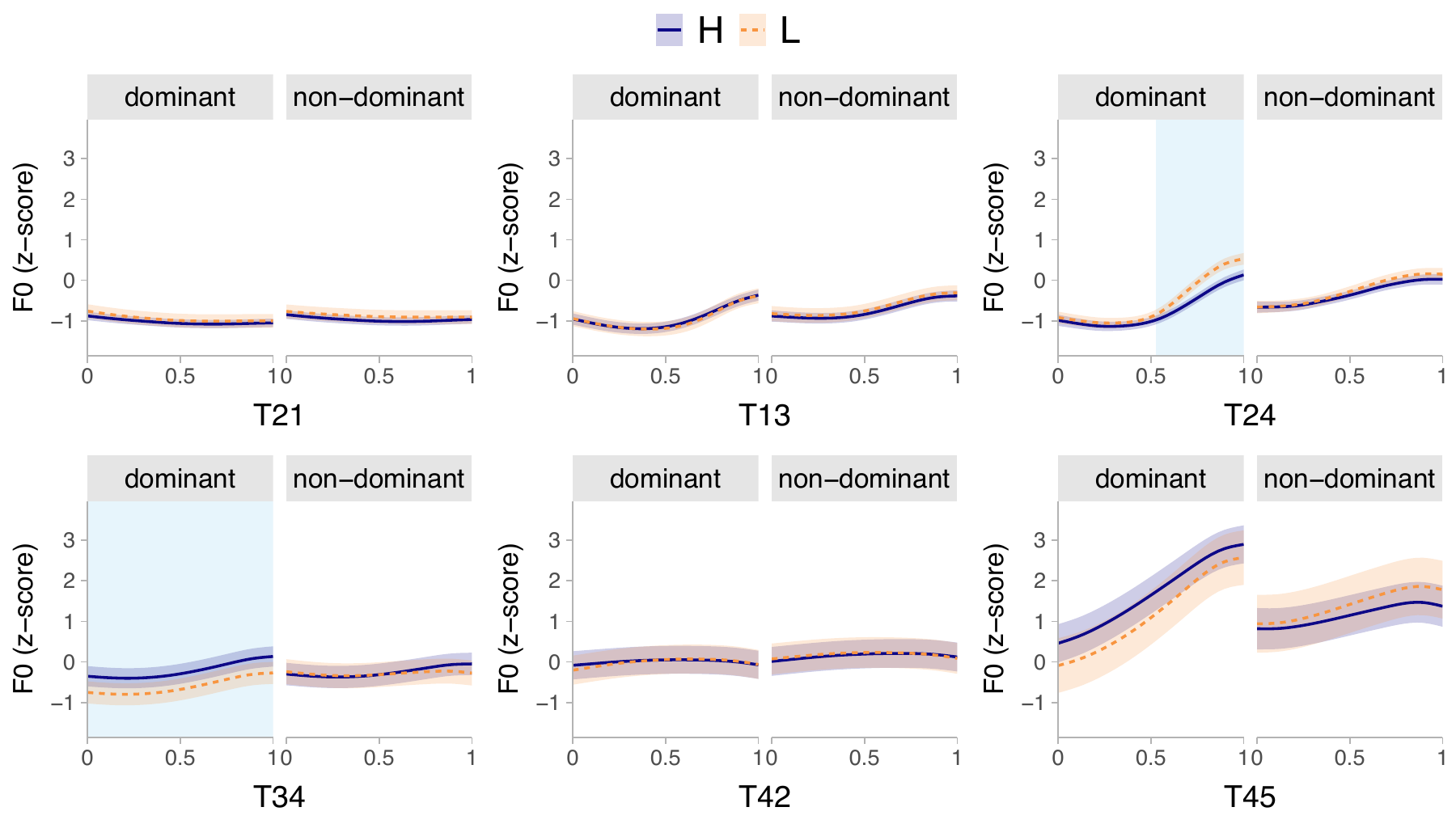
GAMM results on carryover coarticulation
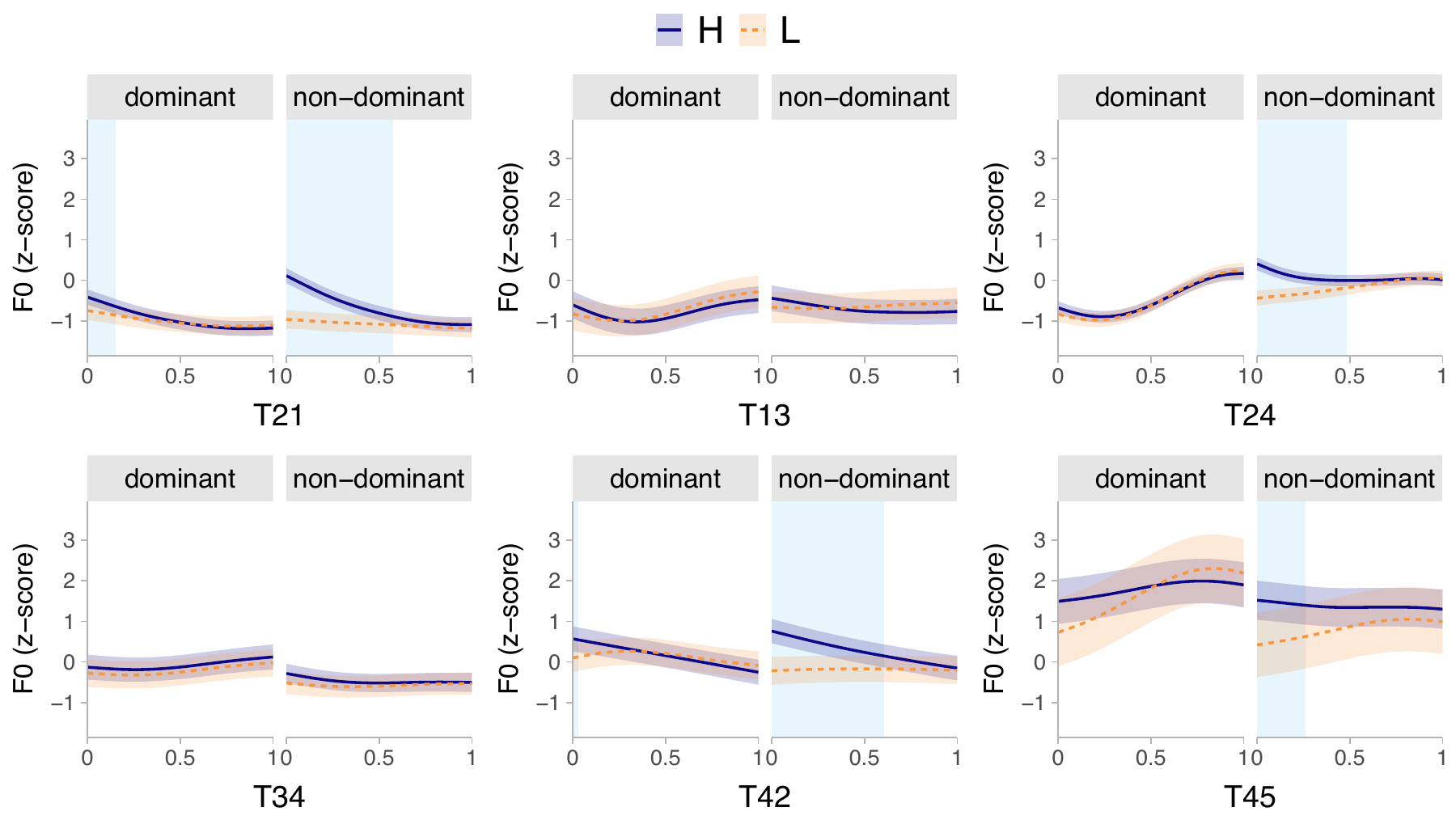
Findings on coarticulation
- Anticipatory coarticulation only occurs for T24 and T34. It is more prominent in dominant syllables.
- Carryover coarticulation observed for T21, T24, T42, and T45 tones, but is more extensive in non-dominant syllables.
LDA results
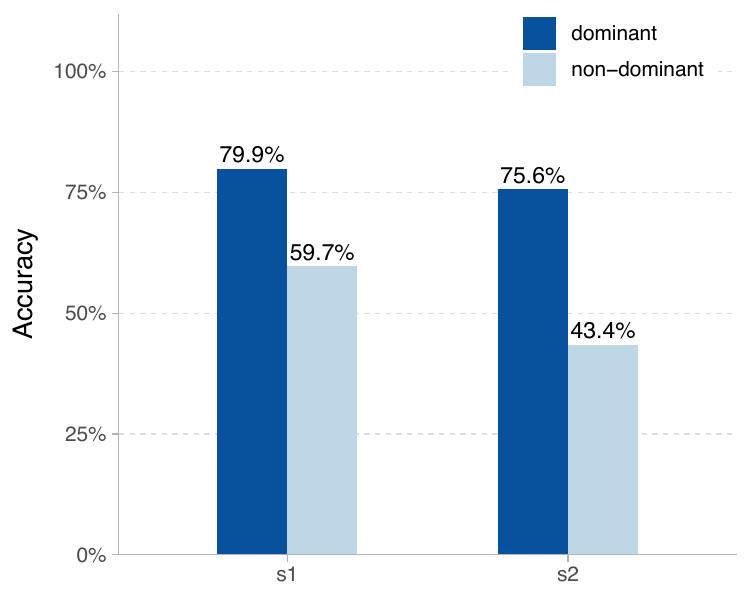
LDA results
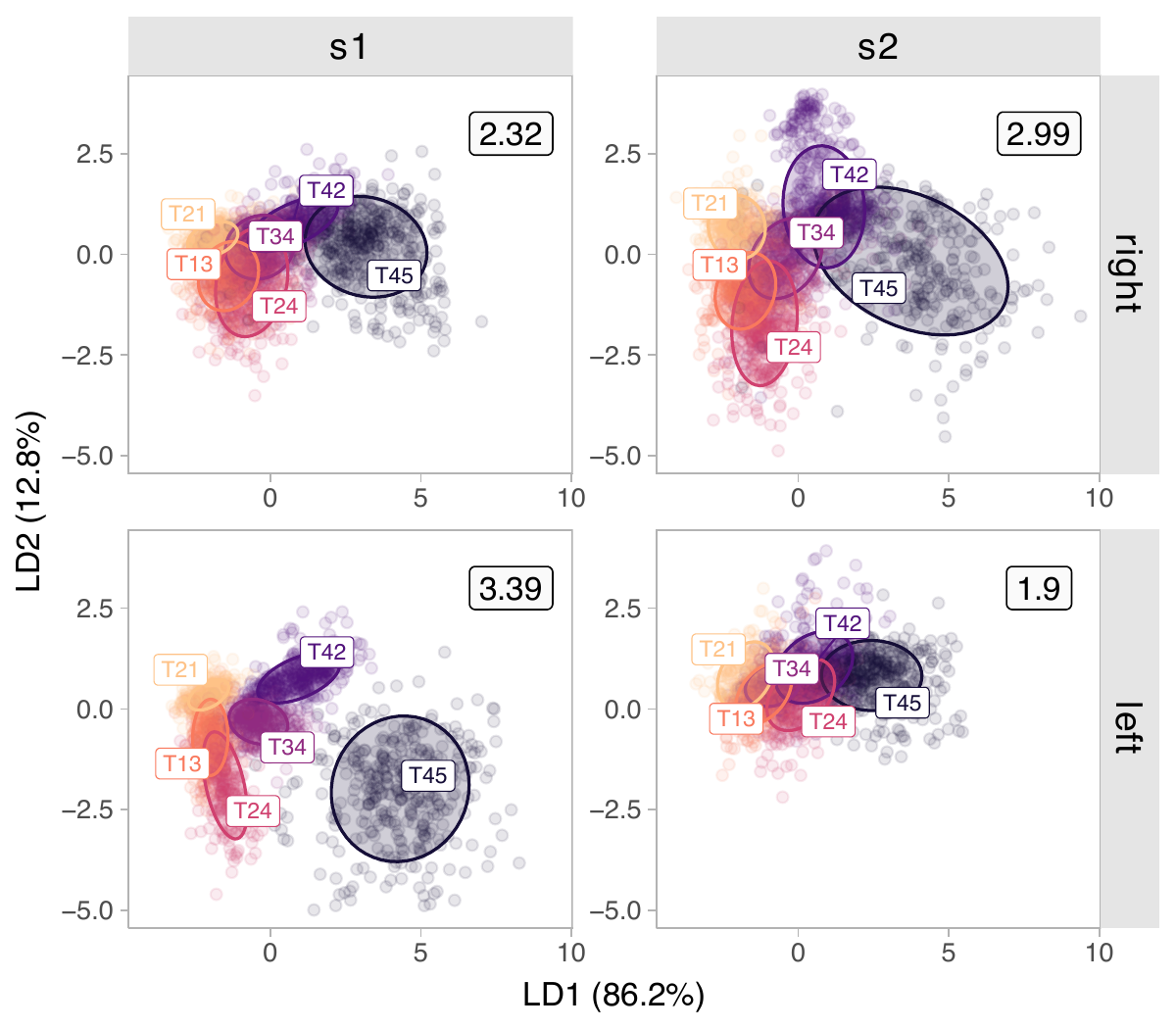
LDA results
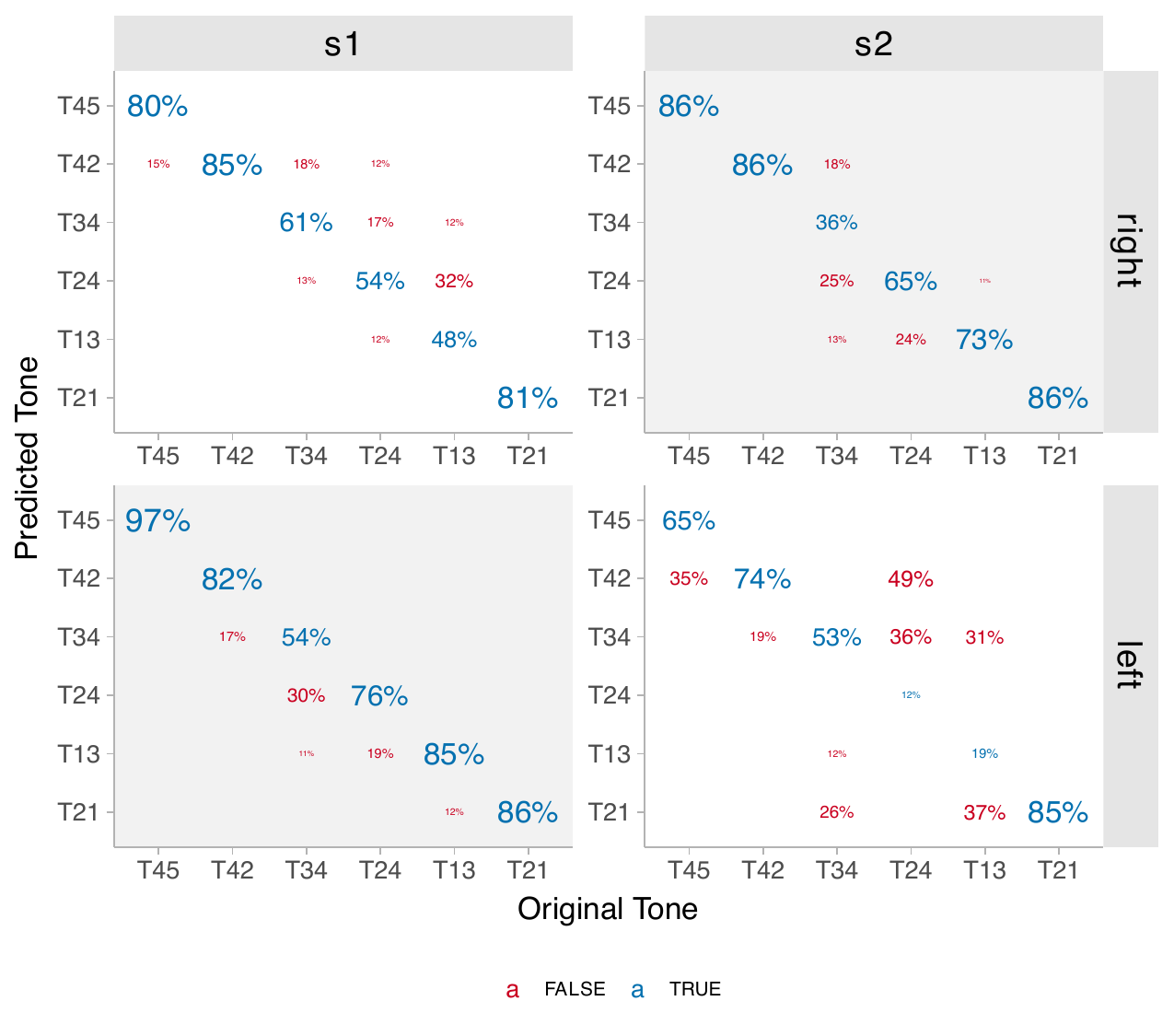
Findings in LDA analysis
- Prediction accuracy is higher in dominant syllables.
- In final non-dominant syllables, the prediction accuracy of T13 and T24 becomes very low (chance level is 16.7%), suggesting tonal merging.
- Initial non-dominant syllables behave similarly to dominant syllables, although the prediction accuracy is lower, probably due to less distinct F0 contours as a consequence of short duration.
Discussion
How does tone sandhi affect duration?
- Dominant syllables are longer than non-dominant syllables (~ 100ms), consistent with the metrical prominence of the dominant syllables.
How does tone sandhi affect tonal production?
- Contour tones retain their contour not only in dominant syllables, but also in initial non-dominant syllables, while the slope of the contour differs.
- Final non-dominant syllables show significantly less F0 excursion, indicating tonal leveling.
- LDA analysis suggests T13 and T24 do lose their tonal identity, yet the picture is more complex than categorical merging.
How does tone sandhi affect tonal coarticulation?
- Only the carryover effect is extensively influenced by tone sandhi.
- Non-dominant syllables show more carryover coarticulation than dominant syllables.
Asymetric tone sandhi
- Left- and right-dominant tone sandhi in Changsha Xiang is asymmetric.
- Paradigmatic neutralization (J. Zhang, 2007) is only found in the final non-dominant syllables, while those in initial non-dominant syllables only undergo tonal undershoot, with less F0 excursions than in dominant syllalbes due to short duration.
Asymetric tone sandhi
This is Similar to the Shanghai Wu tone sandhi, which is also asymetric:
- Shanghai Wu left-dominant tone sandhi: the tone spreads from the initial syllable to the final syllable.
- Shanghai Wu right-dominant tone sandhi: a pattern called paradigmatic neutralization (J. Zhang, 2007).
- Paradigmatic neutralization: some default surface tones are inserted.
- They are the four short-level tones (T2-5) in Changsha Xiang.
Asymetric tone sandhi
A similar pattern was found in Chongqing Mandarin (Qing, 2014) as well.
- Only non-dominant syllablers demonstrate tonal leveling.
- E.g., T35 -> T33 when in non-dominant syllables.
- Tones in dominant syllables can largely retain their underlying contours.
The possible cause of the asymmetry
Scenario 1:
- The right-dominant tone sandhi is reusing a sandhi process for phrasal tonologly.
- There might have been a word boundary between the two syllables.
- Tones adjacent to a stronger boundary (word or phrase) are less likely to lose their tonal identity.
The possible cause of the asymmetry
Scenario 2:
- The non-dominant syllable in right-dominant disyllables are word-initial.
- Word-initial position has in general been considered a prosodically strong position such that it blocks tonal neutralization.
- More data on tones in the word-initial syllables in Changsha Xiang multisyllabic words are needed to test this hypothesis.
Typology of tone sandhi in Sinitic languages
- Paradigmatic neutralization is usually found in right-dominant tone sandhi (J. Zhang, 2007; J. Zhang, 2014).
- In Changsha Xiang, it is the left-dominant tone sandhi that shows paradigmatic neutralization.
- A typological hypothesis (in the context of Sinitic languages): In terms of the degree of grammaticalization: tonal spreading > paradigmatic neutralization > tonal undershoot.
Possible tone-stress interaction?
Multiple evidence suggests that the tone sandhi in Changsha Xiang may reflect metrical prominence at the word level:
- Dominant syllables are much longer than non-dominant syllables, and have more distinct tonal production than non-dominant syllables.
- Non-dominant syllables show more tonal coarticulation than dominant syllables.
More research, both phonetic and phonological, is needed to establish stress in Changsha Xiang.
Conclusion
Tone sandhi in Changsha Xiang is asymmetric, involving paradigmatic neutralization only in the final non-dominant syllables. This process may reflect metrical prominence at the word level, with dominant syllables being longer and having more distinct tonal production than non-dominant syllables. Further studies that investigate how other acoustic measures are influenced by tone sandhi are needed.